  • Hoopla logo
  • Browse
  • My Hoopla
  • Log In
Books, videos, and music - all free from your public library!
LoginSign Up

Footer

Hoopla logo, Go to homepage
  • For Patrons
  • For Libraries (opens in new window)
  • For Vendors (opens in new window)
  • Facebook (opens in new window)
  • X (opens in new window)
  • Instagram (opens in new window)
  • YouTube (opens in new window)
  • TikTok (opens in new window)
  • LinkedIn (opens in new window)

Our Company

  • Our Story
  • Get Hoopla for your Library (opens in new window)
  • Get your content on hoopla (opens in new window)
  • Join our team (opens in new window)
  • Accessibility Statement

Our Content

  • Audiobooks
  • Ebooks
  • Movies
  • Television
  • Comics
  • BingePasses
  • Music
  • The Loop Blog

Help

  • Help Center
  • Submit Feedback
  • Facebook (opens in new window)
  • X (opens in new window)
  • Instagram (opens in new window)
  • YouTube (opens in new window)
  • TikTok (opens in new window)
  • LinkedIn (opens in new window)
  • Download on the App Store (opens in new window)
  • Get it on Google Play (opens in new window)
  • Available at Amazon Appstore (opens in new window)
© 2026 Midwest Tape, LLC. All rights reserved. Privacy Policy | Terms of Use
  1. Navigate Home
  2. Ebooks
  3. Willing Seduction

EBOOK

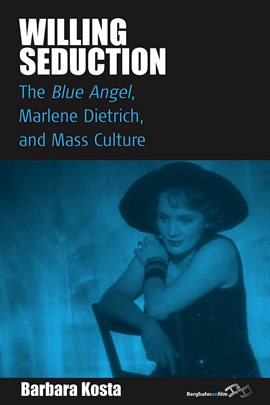
Willing Seduction

The Blue Angel, Marlene Dietrich, and Mass Culture

Barbara KostaSeries: Film Europa
(0)
sign up
Pages
208
Year
2009
Language
English
Publisher
Berghahn Books

About

Josef von Sternberg's 1930 film The Blue Angel (Der blaue Engel) is among the best known films of the Weimar Republic (1919-1933). A significant landmark as one of Germany's first major sound films, it is known primarily for launching Marlene Dietrich into Hollywood stardom and for initiating the mythic pairing of the Austrian-born American director von Sternberg with the star performer Dietrich.


This fascinating cultural history of The Blue Angel provides a new interpretive framework with which to approach this classic Weimar film and suggests that discourses on mass and high culture are integral to the film's thematic and narrative structure. These discourses surface above all in the relationship between the two main characters, the cabaret entertainer Lola Lola (Marlene Dietrich) and the high school teacher Immanuel Rath (one-time Oscar winner Emil Jannings). In addition to offering insight into some of the major debates that informed the Weimar Republic, this book demonstrates that similar issues continue to shape the contemporary cultural landscape of Germany. Barbara Kosta thus also looks at Dietrich as a contemporary cultural icon and at her symbolic value since German unification and at Lola Lola's various "incarnations."
Related Subjects

  • Media Studies
  • Social Science
  • Adult Nonfiction
  • History & Criticism
  • Film
  • Performing Arts

Extended Details

  • SeriesFilm Europa

    Artists

    Barbara KostaAuthor