Books, videos, and music - all free from your public library!
LoginSign Up

Footer

Hoopla logo, Go to homepage
  • For Patrons
  • For Libraries (opens in new window)
  • For Vendors (opens in new window)
  • Facebook (opens in new window)
  • X (opens in new window)
  • Instagram (opens in new window)
  • YouTube (opens in new window)
  • TikTok (opens in new window)
  • LinkedIn (opens in new window)

Our Company

  • Our Story
  • Get Hoopla for your Library (opens in new window)
  • Get your content on hoopla (opens in new window)
  • Join our team (opens in new window)
  • Accessibility Statement

Our Content

  • Audiobooks
  • Ebooks
  • Movies
  • Television
  • Comics
  • BingePasses
  • Music
  • The Loop Blog

Help

  • Help Center
  • Submit Feedback
  • Facebook (opens in new window)
  • X (opens in new window)
  • Instagram (opens in new window)
  • YouTube (opens in new window)
  • TikTok (opens in new window)
  • LinkedIn (opens in new window)
  • Download on the App Store (opens in new window)
  • Get it on Google Play (opens in new window)
  • Available at Amazon Appstore (opens in new window)
© 2026 Midwest Tape, LLC. All rights reserved. Privacy Policy | Terms of Use
  • Hoopla logo
  • Browse
  • My Hoopla
  • Log In
  1. Navigate Home
  2. Ebooks
  3. Thin Sympathy

EBOOK

Thin Sympathy

A Strategy to Thicken Transitional Justice

Joanna R. QuinnSeries: Pennsylvania Studies in Human Rights
(0)
sign up
Pages
272
Year
2021
Language
English
Publisher
University of Pennsylvania Press, Inc.

About

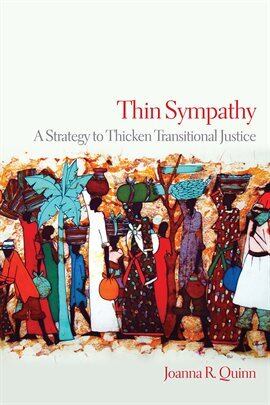
Transitional justice, commonly defined as the process of confronting the legacies of past human rights abuses and atrocities, often does not produce the kinds of results that are imagined. In multiethnic, divided societies like Uganda, people who have not been directly affected by harm, atrocity, and abuse go about their daily lives without ever confronting what happened in the past. When victims and survivors raise their voices to ask for help, or when plans are announced to address that harm, it is this unaffected population that see such plans as pointless. They complain about what they perceive as the "needless" time and money that will be spent to fix something that they see as unimportant and, ultimately, block any restorative processes.
Joanna R. Quinn spent twenty years working in Uganda and uses its particular case as a lens through which she examines the failure of deeply divided societies to acknowledge the past. She proposes that the needed remedy is the development of a very rudimentary understanding-what she calls "thin sympathy"-among individuals in each of the different factions and groups of the other's suffering prior to establishing any transitional justice process. Based on 440 extensive interviews with elites and other thought leaders in government, traditional institutions, faith groups, and NGOs, as well as with women and children throughout the country, Thin Sympathy argues that the acquisition of a basic understanding of what has taken place in the past will enable the development of a more durable transitional justice process.
Related Subjects

  • Human Rights
  • Political Science
  • Adult Nonfiction
  • Genocide & War Crimes

Extended Details

  • SeriesPennsylvania Studies in Human Rights

    Artists

    Joanna R. QuinnAuthor