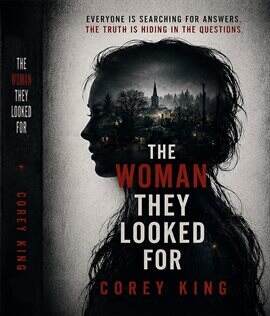
The Woman They Looked For
Everyone is searching for the truth.
They're just searching in the wrong places.
When Mara Ellison vanishes without a trace, her disappearance sends shockwaves through the quiet town of Briar Glen. A smear of blood, a desperate recorded message, and a growing list of suspects convince everyone that a violent crime has taken place. As rumors spread and accusations multiply, the town becomes consumed by the need to find someone to blame.
Leading the investigation is Detective Owen Price, who quickly discovers that every answer uncovers another contradiction. Witnesses remember events differently. Timelines don't quite fit. Evidence that should bring clarity only deepens the mystery. The more he investigates, the more he begins to suspect that the greatest obstacle to solving the case isn't the lack of evidence-it's the assumptions everyone has already accepted as fact.
Meanwhile, Mara's sister, Nina, refuses to stop searching. Desperate to bring her sister home, she follows every lead she can find, unaware that each new discovery pulls her further into a web of manipulation, hidden motives, and carefully constructed deception.
As the investigation unfolds, the novel explores far more than a missing-person case. It examines how easily people mistake confidence for truth, how quickly communities create narratives to explain uncertainty, and how perception can become more powerful than reality. Every conversation, every clue, and every seemingly insignificant detail matters. Readers are challenged to question not only what they believe happened, but why they believe it.
Rather than relying on cheap twists or shock value, The Woman They Looked For builds its suspense through psychological tension. Every revelation forces both the characters and the reader to reevaluate what they thought they understood. The clues are present from the beginning-but only in hindsight do they reveal the larger picture.
At its core, the novel is about truth, manipulation, grief, guilt, justice, and the stories people tell themselves to make sense of tragedy. It asks a simple but unsettling question:
What if the truth isn't hidden by a lack of evidence-but by the questions no one thought to ask?
Perfect for readers who enjoy psychological thrillers filled with layered mysteries, morally complex characters, and endings that cast everything that came before in a completely different light.