EBOOK
About
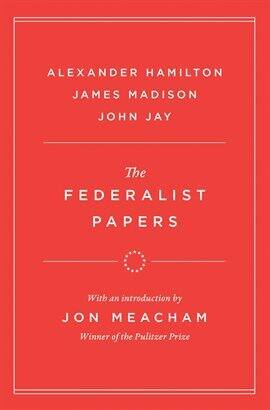
#1 New York Times bestselling author Jon Meacham presents the brilliant and stirring essays in defense of the Constitution-written by Alexander Hamilton, John Jay, and James Madison-that made the American republic.
In September 1787, after a long summer of intense deliberation and compromise, the Federal Convention released a proposed Constitution of the United States-and immediately ignited a firestorm. Public debate was passionate and fierce. Supporters, the Federalists, believed the Constitution would save the floundering former colonies from the confusion and anarchy of the current, weak government. Detractors held that adopting the Constitution would mean nothing less than the end of American liberty.
The Federalists-among them, George Washington and Benjamin Franklin-knew that the stakes could not be higher: the ideals of the Declaration of Independence, and America's very existence as an independent nation, depended on the protection of the Constitution. And so on Saturday, October 27, 1787, Alexander Hamilton came to its defense, publishing the first column of what would come to be known as The Federalist Papers.
Written by Hamilton, James Madison, and John Jay from October 1787 to August 1788-a span of 294 days that ranks among the most consequential periods in politics-The Federalist Papers are part history, part political science, and part theology. Introduced here by bestselling American historian and biographer Jon Meacham, they offer unparalleled insight into the workings of the democratic process and the values underpinning the American project-then as now. Jon Meacham is a Pulitzer Prize–winning biographer. The Rogers Chair in the American Presidency at Vanderbilt University, he is the author of the New York Times bestsellers And There Was Light: Abraham Lincoln and the American Struggle, His Truth Is Marching On: John Lewis and the Power of Hope, The Soul of America, The Hope of Glory: Reflections on the Last Words of Jesus, Destiny and Power: The American Odyssey of George Herbert Walker Bush, Thomas Jefferson: The Art of Power, American Lion: Andrew Jackson in the White House, American Gospel, and Franklin and Winston. The Federalist No. 1: Hamilton
October 27, 1787
To the People of the State of New York.
After an unequivocal experience of the inefficacy of the subsisting Federal Government, you are called upon to deliberate on a new Constitution for the United States of America. The subject speaks its own importance; comprehending in its consequences, nothing less than the existence of the Union, the safety and welfare of the parts of which it is composed, the fate of an empire, in many respects, the most interesting in the world. It has been frequently remarked, that it seems to have been reserved to the people of this country, by their conduct and example, to decide the important question, whether societies of men are really capable or not, of establishing good government from reflection and choice, or whether they are forever destined to depend, for their political constitutions, on accident and force. If there be any truth in the remark, the crisis, at which we are arrived, may with propriety be regarded as the æra in which that decision is to be made; and a wrong election of the part we shall act, may, in this view, deserve to be considered as the general misfortune of mankind.
This idea will add the inducements of philanthropy to those of patriotism to heighten the solicitude, which all considerate and good men must feel for the event. Happy will it be if our choice should be directed by a judicious estimate of our true interests, unperplexed and unbiassed by considerations not connected with the public good. But this is a thing more ardently to be wished than seriously to be expected. The plan offered to our deliberations, affects too many particular interests, innovates upon too many local institutions, not to involve in its discussion a variety of objects for