Books, videos, and music - all free from your public library!
LoginSign Up

Footer

Hoopla logo, Go to homepage
  • For Patrons
  • For Libraries (opens in new window)
  • For Vendors (opens in new window)
  • Facebook (opens in new window)
  • X (opens in new window)
  • Instagram (opens in new window)
  • YouTube (opens in new window)
  • TikTok (opens in new window)
  • LinkedIn (opens in new window)

Our Company

  • Our Story
  • Get Hoopla for your Library (opens in new window)
  • Get your content on hoopla (opens in new window)
  • Join our team (opens in new window)
  • Accessibility Statement

Our Content

  • Audiobooks
  • Ebooks
  • Movies
  • Television
  • Comics
  • BingePasses
  • Music
  • The Loop Blog

Help

  • Help Center
  • Submit Feedback
  • Facebook (opens in new window)
  • X (opens in new window)
  • Instagram (opens in new window)
  • YouTube (opens in new window)
  • TikTok (opens in new window)
  • LinkedIn (opens in new window)
  • Download on the App Store (opens in new window)
  • Get it on Google Play (opens in new window)
  • Available at Amazon Appstore (opens in new window)
© 2026 Midwest Tape, LLC. All rights reserved. Privacy Policy | Terms of Use
  • Hoopla logo
  • Browse
  • My Hoopla
  • Log In
  1. Navigate Home
  2. Ebooks
  3. Park View

EBOOK

Park View

Kent C. Boese
(0)
sign up
Pages
128
Year
2011
Language
English
Publisher
Arcadia Publishing

About

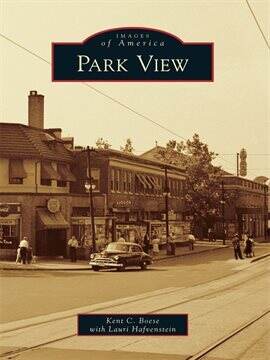
The Park View neighborhood, nestled in the northeastern corner of Washington's Ward One and bordering the Soldiers' Home and Howard University, is historically linked to its main thoroughfare, Georgia Avenue. Located on high ground in close proximity to downtown, the land was home to farms and country retreats throughout the 19th century. Park View's location on a streetcar line leading to the Washington waterfront hastened development when the city experienced a housing boom at the start of the 20th century. Builders, including Harry Wardman and Edgar S. Kennedy, constructed entire streets of row houses to meet the demand. Between 1948 and 1950, the community experienced rapid demographic changes, resulting in a solidly African American community. Civil unrest in the late 1960s dramatically impacted Georgia Avenue, with many businesses deciding to leave the corridor rather than stay. The opening of Metro stations at Columbia Heights and Georgia Avenue in 1999 reinvigorated the community and laid a foundation for new investment and development in the area.
Related Subjects

  • Pictorials
  • Travel
  • Adult Nonfiction
  • Regional
  • Subjects & Themes
  • Photography
  • Historical
  • General
  • State & Local
  • United States
  • History
  • Middle Atlantic (DC, DE, MD, NJ, NY, PA)

Artists

Kent C. BoeseAuthor