  • Hoopla logo
  • Browse
  • My Hoopla
  • Log In
Books, videos, and music - all free from your public library!
LoginSign Up

Footer

Hoopla logo, Go to homepage
  • For Patrons
  • For Libraries (opens in new window)
  • For Vendors (opens in new window)
  • Facebook (opens in new window)
  • X (opens in new window)
  • Instagram (opens in new window)
  • YouTube (opens in new window)
  • TikTok (opens in new window)
  • LinkedIn (opens in new window)

Our Company

  • Our Story
  • Get Hoopla for your Library (opens in new window)
  • Get your content on hoopla (opens in new window)
  • Join our team (opens in new window)
  • Accessibility Statement

Our Content

  • Audiobooks
  • Ebooks
  • Movies
  • Television
  • Comics
  • BingePasses
  • Music
  • The Loop Blog

Help

  • Help Center
  • Submit Feedback
  • Facebook (opens in new window)
  • X (opens in new window)
  • Instagram (opens in new window)
  • YouTube (opens in new window)
  • TikTok (opens in new window)
  • LinkedIn (opens in new window)
  • Download on the App Store (opens in new window)
  • Get it on Google Play (opens in new window)
  • Available at Amazon Appstore (opens in new window)
© 2026 Midwest Tape, LLC. All rights reserved. Privacy Policy | Terms of Use
  1. Navigate Home
  2. Ebooks
  3. Last Weapons

EBOOK

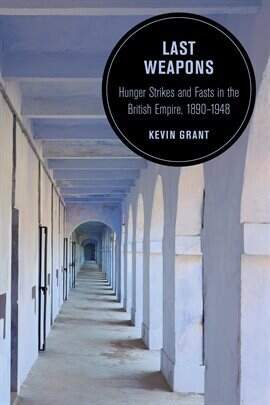
Last Weapons

Hunger Strikes and Fasts in the British Empire, 1890–1948

Kevin GrantSeries: Berkeley Series in British Studies
(0)
sign up
Pages
232
Year
2019
Language
English
Publisher
University of California Press

About

Last Weapons explains how the use of hunger strikes and fasts in political protest became a global phenomenon. Exploring the proliferation of hunger as a form of protest between the late-nineteenth and mid-twentieth centuries, Kevin Grant traces this radical tactic as it spread through trans-imperial networks among revolutionaries and civil-rights activists from Russia to Britain to Ireland to India and beyond. He shows how the significance of hunger strikes and fasts refracted across political and cultural boundaries, and how prisoners experienced and understood their own starvation, which was then poorly explained by medical research. Prison staff and political officials struggled to manage this challenge not only to their authority, but to society's faith in the justice of liberal governance. Whether starving for the vote or national liberation, prisoners embodied proof of their own assertions that the rule of law enforced injustices that required redress and reform. Drawing upon deep archival research, the author offers a highly original examination of the role of hunger in contesting an imperial world, a tactic that still resonates today.
Related Subjects

  • Imperialism
  • Political Science
  • Adult Nonfiction
  • Civil Rights
  • Human Rights
  • General
  • Great Britain
  • Europe
  • History

Extended Details

  • SeriesBerkeley Series in British Studies #16

    Artists

    Kevin GrantAuthor