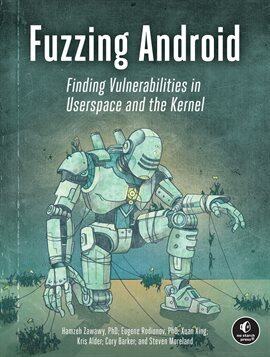
The operational playbook for fuzzing Android, from Binder services to the Linux kernel, by Google's Android Security Team.
Android is three billion devices of hardened, audited, relentlessly defended code, and fuzzing brings it down anyway. The method is almost crude: bury the system in malformed input and wait for the rare case that cracks something open. A crash is the tell, and behind it is usually a way in.
This is the book from the Google engineers who do that for a living. They've fuzzed Android's Binder IPC, the Pixel modem, GPU drivers, and kernel components, and found root-level vulnerabilities the architecture was supposed to keep out of reach. Now they show you how they work.
Most fuzzing books stop at the concept. This one runs the campaign. You'll target the IPC layer with libFuzzer and AFL++, stand up a reproducible environment across emulators and real devices, instrument native code and system services for coverage, triage and reproduce crashes, and extend Syzkaller to reach new kernel drivers. Just as important, you'll build the judgment that separates a fuzzer that finds bugs from one that only makes noise: which targets are worth your time, when to bypass runtime checks, and how to keep a campaign disciplined instead of chaotic.
No other book covers Android fuzzing from userspace services through the kernel. The existing titles stop at app-layer pentesting or teach general fuzzing with no Android specificity. This is the one written by the people who actually found the bugs.
With a foreword by David Kleidermacher, Google's VP of Platforms Security and Privacy.
For security researchers, OEM security engineers, and bug bounty hunters who target the world's largest mobile platform and want the operational playbook rather than the tour. Hamzeh Zawawy, PhD is a software engineering manager at Google leading the Android Blue Team, focused on platform hardening and proactive security mitigations. He has published research on fuzzing and root cause analysis and contributed to The Art and Science of Analyzing Software Data (Elsevier).
Eugene Rodionov, PhD is Device and Platform Security tech lead at Google. He is co-author of Rootkits and Bootkits (No Starch Press) and a regular presenter at Black Hat and DEF CON on Android security, GPU exploitation, and reverse engineering.
Xuan Xing leads the Android Red Team at Google. He has spent the past several years finding security vulnerabilities in Android and Pixel devices through fuzzing and has presented his research at Black Hat and DEF CON.
Kris Alder is a software engineer at Google specializing in Android kernel security and fuzzing.
Cory Barker is a software engineer at Google specializing in Android platform security and fuzzing.
Steven Moreland has worked on Android architecture for nearly a decade, reinventing Android's inter-process communication system and leading the effort that fuzzed all C++ services in Android.