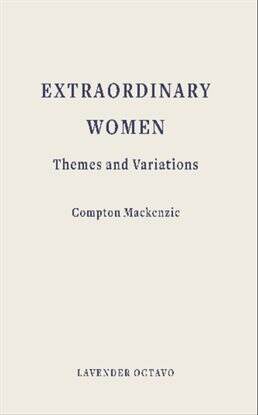
First published in 1928, the same explosive year as Radclyffe Hall's The Well of Loneliness and Virginia Woolf's Orlando, Compton Mackenzie's Extraordinary Women: Theme and Variations remains one of the era's sharpest and funniest novels. Where Hall wrote tragedy and Woolf wrote fantasy, Mackenzie wrote comedy of manners, and it worked. His satire slipped past the censors that banned The Well of Loneliness outright.
Set on Sirene, a lightly disguised Capri, during the First World War, the novel follows the fickle, magnetic Rosalba Donsante through a hothouse of expatriate lesbian society: painters, pianists, poets, and eccentric grandes dames, many drawn from real women Mackenzie knew, including figures who inspired Radclyffe Hall and Romaine Brooks. Feuds erupt, hearts are traded like currency, and every character believes herself the heroine of the story.
Companion to Mackenzie's Vestal Fire, this roman à clef offers a rare comic counterpoint to the more solemn queer fiction of its moment. It is affectionate and merciless by turns, and startlingly modern in its refusal to treat desire as tragedy. For readers of vintage satire, LGBTQ+ literary history, and Jazz Age scandal, Extraordinary Women is a wickedly entertaining rediscovery.