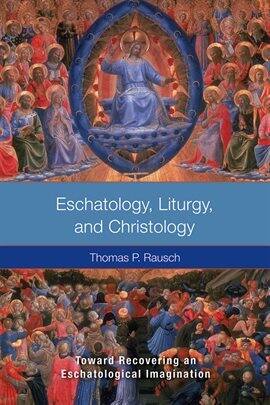
If Christian hope is reduced to the salvation of the soul in a heaven beyond death, wrote Jürgen Moltmann, "it loses its power to renew life and change the world, and its flame is quenched." Thomas Rausch, SJ, agrees, arguing that too often the hoped-for eschaton has been replaced by an almost exclusive emphasis on the "four last things"-death and judgment, heaven and hell. But eschatology cannot be reduced to the individual salvation.
In his new book, Rausch explores eschatology's intersections with Christology, soteriology, ecclesiology, and, perhaps most intriguingly, liturgy. With the early Christians, he sees God's future as a radically social reality, already present initially in Christian worship, especially in the celebration of the Eucharist. This fresh and insightful work of theology engages voices both ancient and contemporary.
"Thomas Rausch has once again filled a significant gap in contemporary theology with this volume that considers the aim and goal of Christian life with particular attention to the liturgy and Christology. With the thoroughness and clarity that have come to characterize his writings, he introduces the reader to a wide range of contemporary theologians while offering a clear path and solid Catholic
John F. Baldovin, SJ, Professor of Historical and Liturgical Theology, Boston College