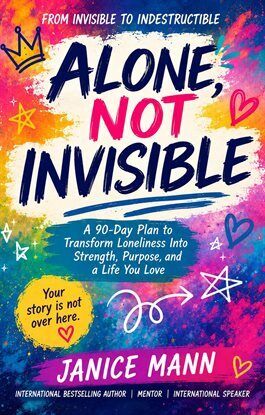
Being a teenager can sometimes feel like standing in the middle of a crowded room and believing that no one truly sees you. You may be surrounded by friends, classmates, teachers, family, and social media connections and still feel completely alone.
This compassionate and empowering guide reminds teenagers of one essential truth: feeling alone does not mean you are invisible, unimportant, or without value.
Teenage life can be exciting, but it can also be confusing. Young people are constantly receiving messages about who they should be, how they should look, what they should accomplish, and where they should belong. Social media can make those pressures even stronger by creating the illusion that everyone else is happier, more popular, more confident, or more successful.
Behind those carefully created images, however, many teenagers are struggling with the same questions: Who am I? Where do I belong? Why don't I feel good enough? Does anyone understand what I am going through? What happens if I fail? What if people don't accept the real me?
The book addresses the emotional realities teenagers encounter while growing into adulthood. It explores loneliness, self-esteem, confidence, peer pressure, friendships, difficult emotions, fear, anxiety, rejection, bullying, social expectations, communication, boundaries, decision-making, and the importance of asking for help when life becomes too difficult to manage alone.
Rather than talking down to teenagers, this guide meets young people where they are. Its message is one of understanding, encouragement, personal responsibility, resilience, and hope.
Teenagers are reminded that they do not have to change themselves simply to earn acceptance. Healthy friendships should not require someone to surrender their identity or constantly prove their worth. Learning who deserves a place in your life-and recognizing when a relationship is unhealthy-is an important part of becoming emotionally strong and independent.
But today's pain does not predict tomorrow's possibilities.
One of the most important lessons in Alone, Not Invisible is that asking for help is an act of strength. Teenagers are encouraged to communicate with trusted adults, parents, caregivers, teachers, counselors, mentors, or other appropriate sources of support when they are struggling. No young person should believe that they must carry every problem alone.
.
Being different is not a weakness.
Being quiet does not mean you have nothing to say.
Being uncertain does not mean you are incapable.
Making a mistake does not make you a failure.
Feeling lonely does not mean you are unwanted.
And feeling invisible does not mean you don't matter.
Alone, Not Invisible: A Teenage Guide encourages young people to discover the person underneath the expectations, labels, comparisons, and pressures surrounding them. It challenges teenagers to recognize their worth, find their voice, make thoughtful choices, develop meaningful relationships, and begin imagining a future built around who they genuinely want to become.
For parents, caregivers, educators, mentors, and counselors, the book can also provide an opportunity to better understand the emotional world teenagers are navigating and to begin conversations that young people may otherwise find difficult to initiate.
Adolescence is not about having everything figured out. It is about discovering, questioning, learning, making mistakes, growing, and gradually becoming the person you were meant to be.
You may sometimes feel alone.
You may sometimes feel misunderstood.
You may even wonder whether anyone notices what you are going through.
But you are here. Your voice matters. Your feelings matter. Your dreams matter. Your future matters.
You may feel alone, but you are never invisible.