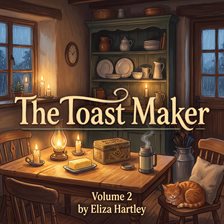
Iris Harland arrives at Elder Cottage in Little Darlow carrying an orange cat named Moss, a soil-coloured scarf, and a cautious appetite for a quieter life. She has left a hollow marketing career and a failed relationship behind her; what she brings instead is an instinct for small rituals - the precise weight of a kettle, the deliberate buttering of toast - and a willingness, still tentative, to begin again.
The village comes to meet her in the way of English villages: gradually, sideways, and through food. A returned envelope brings Arthur Pritchard to the doorstep, his memories of his late wife Mary unlocking something in the cottage's atmosphere. A walnut-wood recipe tin from Mrs Halloway's kitchen turns out to be a small inheritance - handwritten cards carrying the domestic knowledge of winters Iris was not here for. Tom Avery, quiet and paint-splattered, fixes the fence and becomes something harder to name. Through a power-cut supper, a Christmas fair, and the shared labour of digging fence posts in the cold, belonging arrives in increments, one small gesture at a time.
These are episodes from an ongoing cosy village serial. The narration is unhurried and warm, well suited to slow evenings when the day has run its course.